What Is a Marine Electrical System Survey?
A marine electrical system survey is a comprehensive inspection of every electrical component aboard your vessel — from the main DC and AC distribution panels to individual circuits, battery banks, shore power connections, bonding systems, and corrosion protection. Unlike a basic visual check, a professional electrical survey uses calibrated instruments to measure voltage drops, insulation resistance, ground fault protection, and current draw under load conditions.
For boat owners in Southwest Florida, where vessels endure extreme heat, salt air, and frequent lightning activity, electrical system integrity is not optional — it's a safety requirement. The combination of high humidity and saltwater accelerates corrosion on terminals, connections, and wiring insulation at rates far exceeding northern climates.
When Do You Need a Marine Electrical Survey?
Several situations call for a professional electrical system survey:
- Pre-purchase surveys — Before buying any used vessel, an independent electrical survey reveals hidden problems that visual inspections miss. Corroded wiring behind panels, undersized conductors, and improper grounding are common findings that can cost thousands to remediate.
- Insurance requirements — Many marine insurers in Florida now require periodic electrical surveys, especially for vessels over 10 years old or those with previous claims. A clean survey report can lower your premiums.
- Post-lightning strike — Southwest Florida is the lightning capital of the United States. Even indirect strikes can damage electronics, bonding systems, and wiring insulation. A thorough survey after any nearby strike is essential.
- Coast Guard compliance — Commercial vessels and charter boats must meet USCG electrical standards. Regular surveys ensure ongoing compliance and avoid costly citations.
- System upgrades — Before adding new electronics, lithium battery banks, or high-draw equipment like watermakers, an electrical survey confirms your existing infrastructure can handle the additional load.
- Annual maintenance — Proactive boat owners schedule annual electrical surveys as part of their maintenance program, catching small problems before they become dangerous failures.
What Does a Complete Electrical Survey Cover?
1. DC System Inspection
The DC (direct current) system is the backbone of your vessel's electrical infrastructure. A thorough survey includes:
- Battery bank testing — Load testing each battery, measuring specific gravity (for flooded cells), checking terminal voltage under load, and verifying proper bank configuration (series/parallel)
- Charging system analysis — Testing alternator output, voltage regulator function, charge controller settings, and shore power charger performance
- Wire sizing verification — Confirming conductor gauge meets ABYC standards for the circuit's amperage and run length
- Voltage drop testing — Measuring voltage drop across critical circuits under load (ABYC allows max 3% for critical circuits, 10% for non-critical)
- Connection integrity — Inspecting every accessible terminal for corrosion, heat damage, and proper crimping
2. AC System Inspection
The AC (alternating current) system presents the highest risk for electrocution and fire. Survey elements include:
- Shore power connections — Inspecting inlet, cord, and pedestal connections for heat damage, corrosion, and proper polarity
- Main panel inspection — Verifying breaker ratings, bus bar connections, and neutral/ground separation
- GFCI/ELCI protection — Testing ground fault and equipment leakage circuit interrupters for proper trip thresholds
- Isolation transformer testing — If equipped, verifying transformer function and galvanic isolation
- Generator inspection — Testing output voltage, frequency stability, and transfer switch operation
3. Bonding and Grounding System
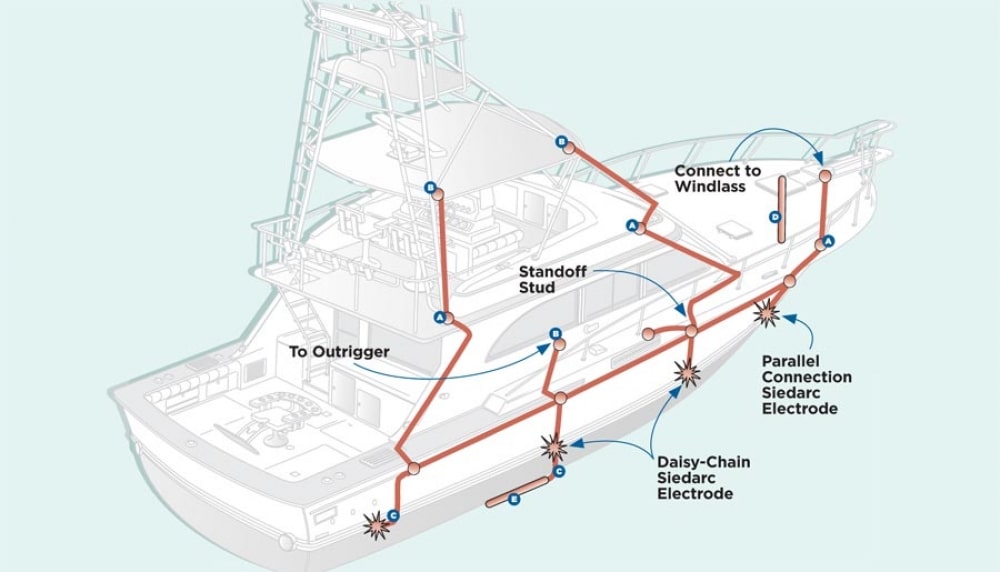
Proper bonding prevents galvanic corrosion and provides a safe path for fault currents. The survey checks:
- Bonding conductor continuity — Measuring resistance between all bonded underwater metals
- Zinc anode condition — Inspecting sacrificial anodes and measuring their protective potential
- Stray current detection — Using a silver/silver chloride reference electrode to detect DC leakage into the water
- Lightning protection — Evaluating the vessel's lightning protection system per ABYC TE-4 standards
4. Navigation and Communication Electronics
Modern vessels carry sophisticated electronics that require clean, stable power:
- Radar, GPS, VHF, AIS — Verifying proper power supply, grounding, and antenna connections
- NMEA 2000 network — Testing backbone integrity, termination resistors, and device communication
- Entertainment systems — Checking for proper isolation from navigation circuits
Common Problems Found During Marine Electrical Surveys in SWFL
After 25+ years of performing electrical surveys on vessels throughout Southwest Florida, from Fort Myers Beach to Naples, Marco Island, Cape Coral, and Sanibel, these are the most frequent issues we encounter:
Corroded Connections
The #1 finding in Florida marine electrical surveys. Salt air and humidity attack every exposed connection. We commonly find green-corroded ring terminals, pitted bus bars, and deteriorated wire insulation — especially in engine rooms and bilge areas where heat and moisture combine.
Undersized Wiring
Many production boats and DIY installations use wire that's too small for the circuit length and amperage. This creates excessive voltage drop, overheating, and potential fire hazards. We see this most often on windlass circuits, thruster wiring, and air conditioning feeds.
Improper Shore Power Wiring
Reversed polarity, missing ground connections, and deteriorated shore power inlets are disturbingly common. These conditions create electrocution hazards — both aboard the vessel and in the surrounding water (Electric Shock Drowning).
Missing or Depleted Zinc Anodes
Florida's warm, mineral-rich waters consume zinc anodes rapidly. Vessels that go more than 6 months without anode inspection often show significant galvanic corrosion on underwater metals, props, shafts, and through-hulls.
Lightning Damage
Even boats that weren't directly struck can suffer from induced voltage spikes. We frequently find damaged electronics, blown MOV surge protectors, and compromised bonding connections from nearby lightning events that the owner never noticed.
ABYC Standards: The Gold Standard for Marine Electrical
The American Boat and Yacht Council (ABYC) sets the industry standards for marine electrical systems. As ABYC-certified technicians, Accumar Marine Service performs all surveys and repairs to these standards:
- E-11 — AC and DC Electrical Systems on Boats
- TE-4 — Lightning Protection
- E-2 — Cathodic Protection
- A-28 — Galvanic Isolators
Choosing an ABYC-certified surveyor ensures your vessel meets the highest safety standards recognized by insurers, the Coast Guard, and marine industry professionals.
How Much Does a Marine Electrical Survey Cost?
The cost of a marine electrical survey depends on vessel size and complexity:
- Small boats (under 30') — $250–$500 for a basic DC/AC survey
- Mid-size vessels (30'–50') — $500–$1,200 for a comprehensive survey including bonding and electronics
- Large yachts (50'+) — $1,200–$3,000+ depending on system complexity, generator count, and electronics suite
Consider this an investment, not an expense. A single electrical fire or electrocution incident costs infinitely more than a professional survey. Insurance companies recognize this — many offer premium discounts for vessels with current survey reports.
Why Choose Accumar Marine Service for Your Electrical Survey?
With over 25 years of marine electrical experience in Southwest Florida, Captain Roland and the Accumar Marine Service team bring unmatched expertise to every survey:
- ABYC-certified technicians with current credentials
- EPA 608 certified for integrated HVAC/electrical systems
- USCG-approved inspection protocols for commercial vessels
- Comprehensive written reports with photos, findings, and prioritized recommendations
- Insurance-accepted documentation recognized by all major marine insurers
- Mobile service — we come to your boat at any SWFL marina or boatyard
We serve all of Southwest Florida including Fort Myers, Fort Myers Beach, Cape Coral, Naples, Marco Island, Sanibel, Captiva, Punta Gorda, Port Charlotte, Englewood, Venice, and Sarasota.
Schedule Your Marine Electrical Survey Today
Don't wait for a problem to reveal itself. Whether you're buying a boat, satisfying insurance requirements, recovering from a lightning event, or simply maintaining your vessel's safety, a professional electrical survey gives you peace of mind and protects your investment.
Call Accumar Marine Service at (239) 323-9600 or book your electrical survey online today. We typically schedule surveys within 3–5 business days throughout Southwest Florida.
Frequently Asked Questions
How often should I get an electrical survey for my boat in SWFL?
Given the harsh marine environment in Southwest Florida, annual electrical surveys are highly recommended to proactively identify and address potential issues. This preventative maintenance helps avoid costly repairs and ensures the safety and reliability of your vessel's electrical systems. Accumar Marine Services in Fort Myers, FL, can schedule these routine inspections for you.
Can an electrical survey help me save money on boat insurance in Florida?
Yes, many marine insurers in Florida now require periodic electrical surveys, especially for older vessels. A clean survey report from a reputable service like Accumar Marine Services can demonstrate your commitment to maintenance, potentially leading to lower premiums or fulfilling policy requirements.
What are the signs that my boat's electrical system might need immediate attention in Cape Coral?
Common indicators of electrical problems include flickering lights, intermittent electronics, unusual odors like burning plastic, or frequent breaker trips. If you notice any of these issues in your Cape Coral vessel, it's crucial to get a professional electrical survey from Accumar Marine Services to prevent further damage or safety hazards.
Is an electrical survey necessary if I'm upgrading my boat's electronics or adding new batteries?
Absolutely. Before adding new high-draw equipment or a lithium battery bank, an electrical survey ensures your existing wiring, charging system, and distribution panels can safely handle the increased load. Accumar Marine Services can assess your current setup and recommend necessary upgrades to support your new installations.
What specific risks do SWFL's climate and weather pose to my boat's electrical system?
Southwest Florida's high humidity, saltwater exposure, and frequent lightning strikes significantly accelerate corrosion and can damage electrical components. These conditions make regular inspections by professionals, such as those at Accumar Marine Services, essential to maintain the integrity and safety of your vessel's electrical system.