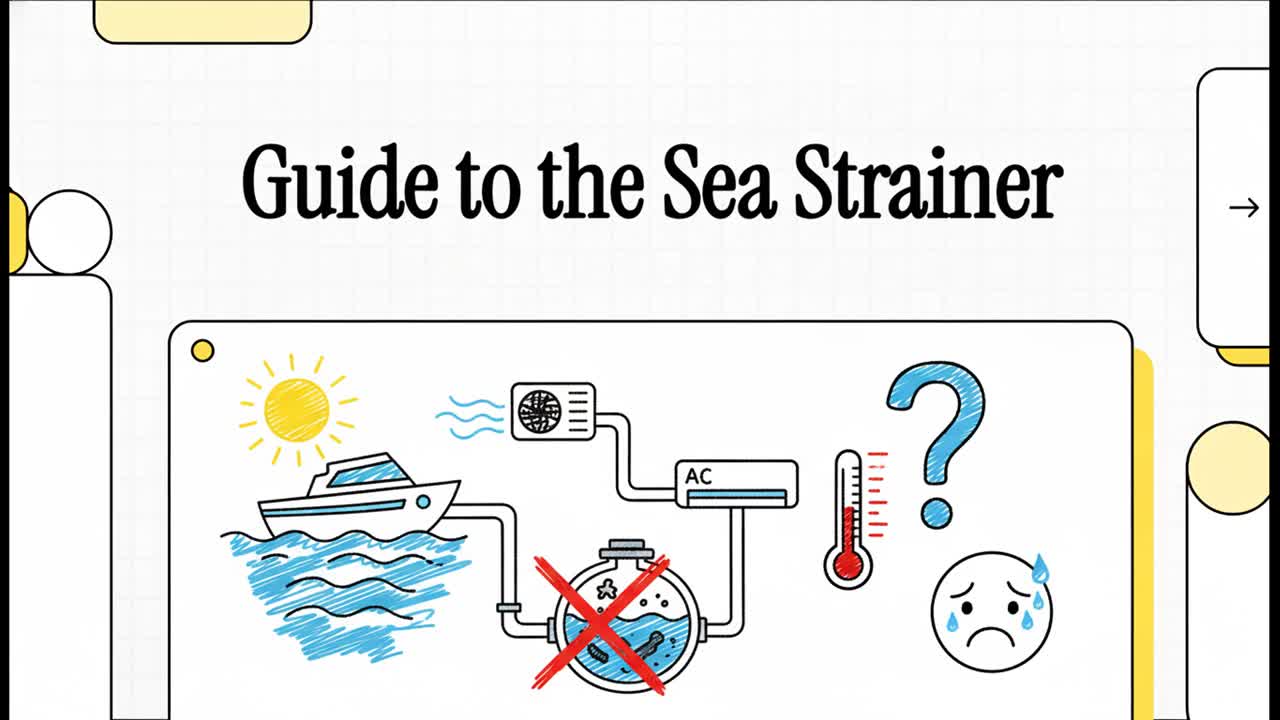
Boating in Southwest Florida offers incredible experiences, but the year-round heat and humidity mean your vessel's air conditioning system is much more than a luxury — it's an absolute necessity. A functioning AC unit not only keeps you comfortable, but it also protects sensitive onboard electronics, prevents mold, and safeguards interior finishes from sagging or debonding.
Because marine AC systems rely on highly corrosive and living seawater for cooling, the warm waters of the Florida coast create a brutal environment for your equipment. Here is your comprehensive guide to keeping your boat's AC running smoothly in Southwest Florida.
1. Monitor Your Raw Water Flow
Most marine AC failures are directly linked to raw water flow interruptions. Your system pumps seawater through a heat exchanger (condenser coil) to remove heat and expels it through an overboard discharge.
Watch the Discharge Stream
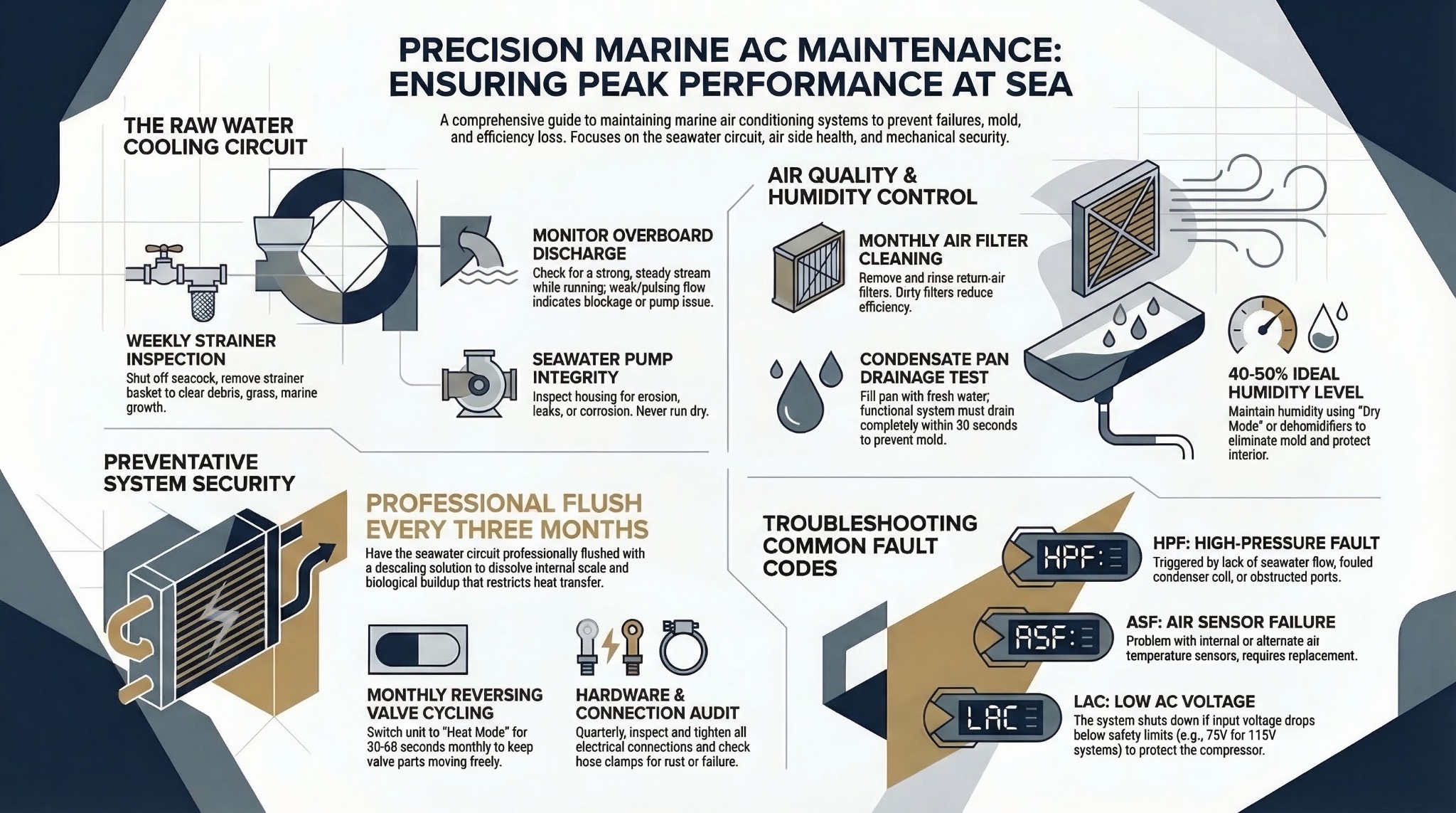
The easiest way to monitor your AC's health is to keep a close eye on the overboard discharge stream. If you notice a weak or pulsing flow, or if your digital control panel flashes an "HPF" (High-Pressure Fault) or "LO" (Low Flow) error code, your water flow is likely restricted.
Weekly Strainer Checks
In areas like Naples, Marco Island, and the southeast coast of Florida, high summer water temperatures cause marine growth and debris to build up incredibly fast. Check and clean your raw water strainer basket weekly to prevent blockages that could trip your system offline.
Pro Tip: Dropping a 1-inch bromine spa tablet (not chlorine) into the strainer basket can be a game-changer for keeping algae and growth at bay.
2. Descale Your Condenser Coils Regularly
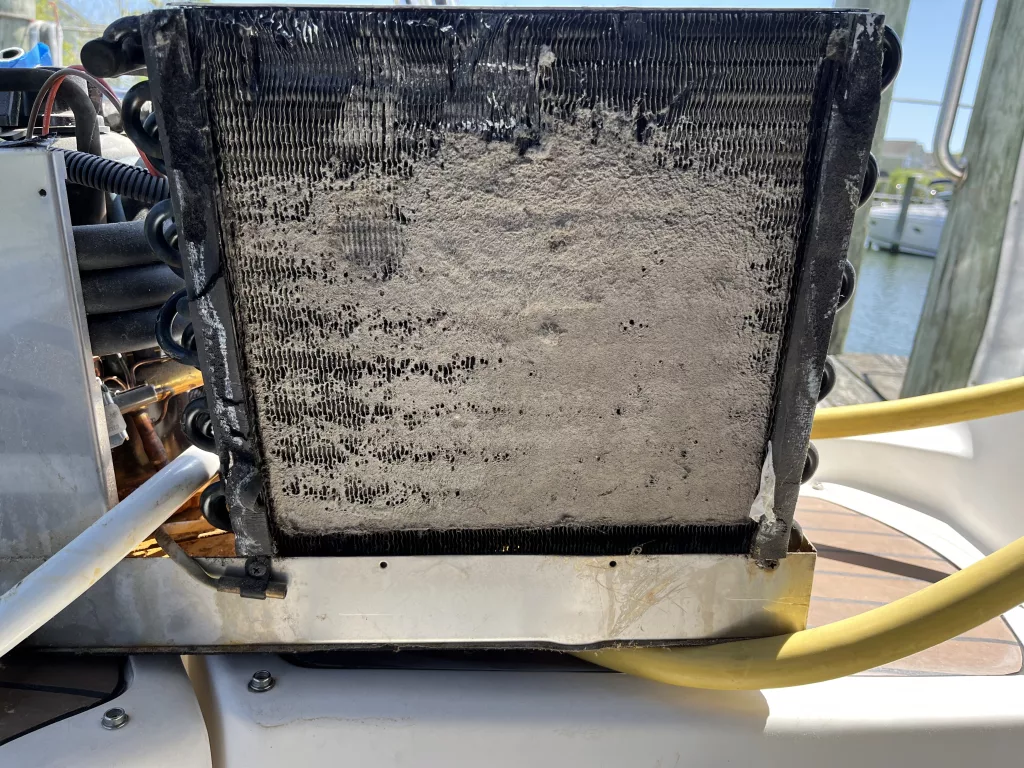
Over time, scale, barnacles, and other marine growth will form inside your AC's condenser coil, greatly decreasing heat transfer and forcing the compressor to work harder and draw more amperage. If left unchecked, tiny barnacles can even clog the high-pressure points of your AC water pump, causing backward leaks and equipment failure.
Flush the System
To combat this, flush the raw water circuit with a marine descaler like Barnacle Buster™. This safely dissolves the scale inside the machine.
How Often?
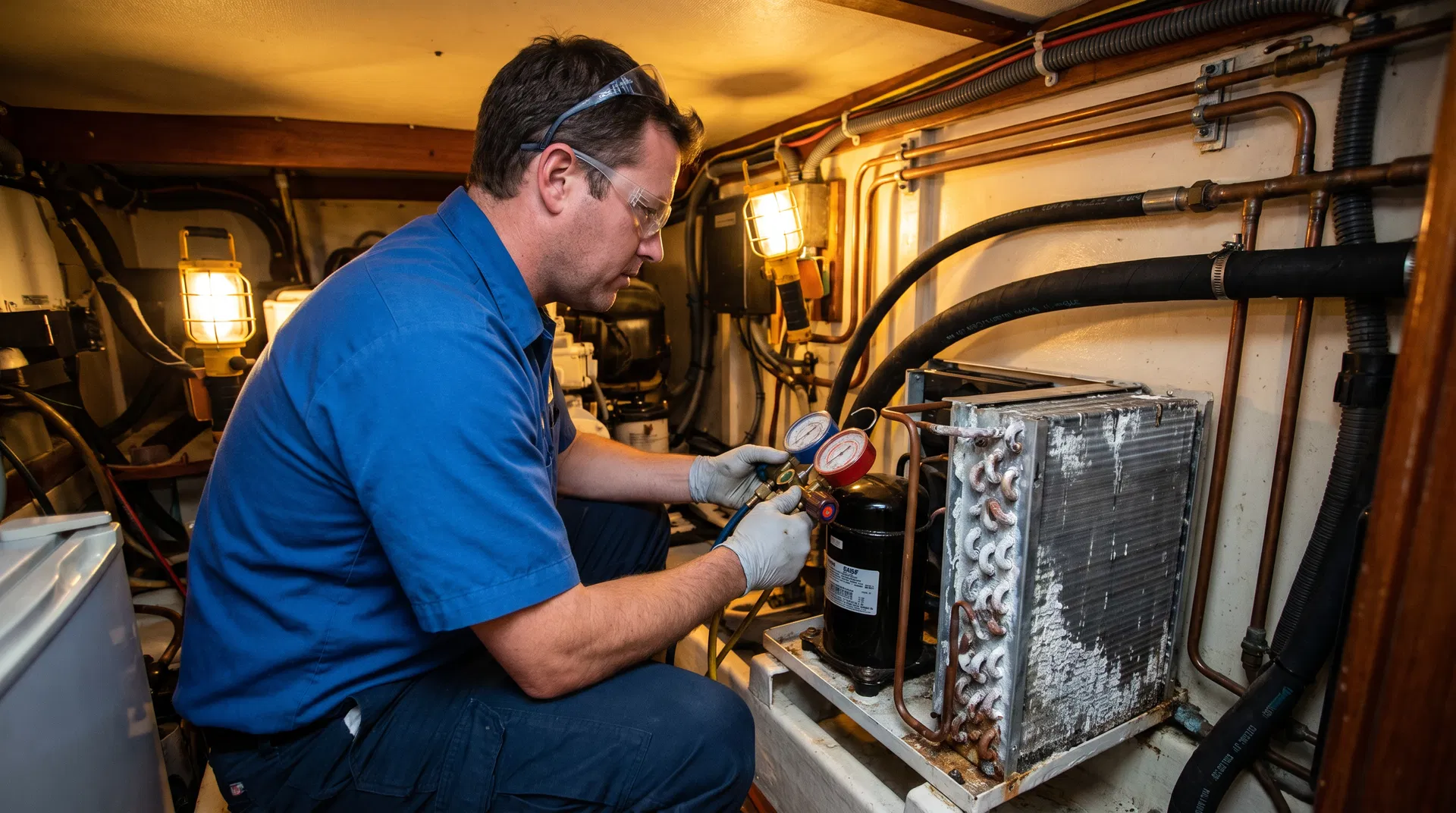
Given the aggressive marine growth in Florida, we recommend performing this flush every 6 to 12 months, or twice a year if you live aboard or wet-slip your boat continuously. This is one of the most common services we perform at ACCUMAR Marine AC Repair — and the single best thing you can do to extend the life of your system.
3. Battle Humidity and Prevent Mold
In Florida, failing to run your AC can result in mold covering everything inside the cabin. A whole-boat dehumidifier that maintains 40–50% humidity is the most effective way to eliminate moisture, mold spores, and odors. However, if you rely solely on your AC:
Run It 24/7
Many Southwest Florida boaters run their AC systems continuously — or use the system's dedicated "humidity mode" — even when away from the boat to prevent the interior wall materials and headliners from ungluing and sagging due to extreme heat.
Use a Portable Dehumidifier
To reduce the wear and tear on your AC unit and raw water lines while you are away, you can use a purpose-built portable dehumidifier and simply run the drain line into a sink. This saves compressor hours and extends the life of your seawater pump.
4. Perform Routine System Maintenance
Beyond managing water flow and humidity, keep up with these basic checks to avoid catastrophic bills:
Clean the Air Filters (Monthly)
A dirty return-air filter restricts airflow, forcing the system to work harder and increasing the risk of the evaporator coil freezing. Check and rinse the filter monthly.
Exercise the Reversing Valve (Monthly)
If you have a reverse-cycle heating and cooling unit, switch the system to "Heat" mode for a few seconds (up to 30 seconds) once a month. This simple step keeps the internal reversing valve from sticking — a repair that costs $800+ if it seizes.
Inspect Clamps and Hoses (Quarterly)
An AC system is only as strong as its smallest hose clamp. A failed clamp can cause a seawater leak, pooling water in the bilge, spreading rust, and potentially causing five-figure electrical and generator failures. Inspect all hoses for softness or bulges and replace rusty clamps yearly.
The Bottom Line
Maintaining a yacht's air conditioning system in Southwest Florida requires diligence, but spending a few hours on preventative care will save you tens of thousands of dollars in repairs and keep your boat perfectly chilled all summer long.
If you'd rather have a professional handle it, our Preventive Maintenance Programs start at $250 and cover AC descaling, strainer service, filter cleaning, hose inspection, and electrical checks — scheduled around the Florida seasons so nothing gets missed.
Frequently Asked Questions
Q: How often should I flush my marine AC in Florida?
A: Every 6–12 months minimum. If you wet-slip year-round or live aboard, flush twice a year. The warm Gulf waters accelerate barnacle and scale buildup faster than northern climates.
Q: Can I use chlorine tablets in my strainer basket?
A: No — chlorine is too aggressive and can damage seals, gaskets, and copper components. Use bromine spa tablets instead. They control algae growth without corroding your system.
Q: Should I leave my boat AC running when I'm not aboard?
A: In Southwest Florida, yes. Running the AC (or at minimum a dehumidifier) prevents mold, protects headliners and interior finishes from heat damage, and keeps electronics safe. Most liveaboards and seasonal residents run their systems 24/7.
Q: What does an HPF error code mean on my marine AC?
A: HPF stands for High-Pressure Fault. It almost always means restricted raw water flow — check your strainer basket first, then inspect for kinked hoses or a failing seawater pump. If the problem persists, you likely need a professional condenser flush.
Q: How much does marine AC maintenance cost?
A: A basic descaling flush runs $175–$350 depending on the number of units. Our maintenance programs bundle AC service with electrical checks and are $140 per visit. Service is by appointment; there is no emergency service. Our AI phone receptionist answers calls 24/7.