
Many boat owners in Southwest Florida assume that because we rarely see freezing temperatures, their marine air conditioning systems don't need seasonal attention. That assumption costs boat owners thousands of dollars every year. While we may not deal with frozen pipes, Florida's warm, mineral-rich waters create unique challenges that make winterization just as important here as it is up north — just for different reasons.
Why Florida Boats Still Need AC Winterization
Florida's Gulf Coast waters, particularly in the Fort Myers, Cape Coral, and Naples areas, are shallow, warm, and loaded with calcium, magnesium, and biological growth. During the peak summer months, your marine AC system works overtime, pulling this water through the condenser to cool your cabin. By the time the cooler months arrive (November through February), your system has accumulated months of scale buildup inside the heat exchanger and raw water lines.
If you don't address this buildup before reducing your AC usage, you're essentially letting hardened mineral deposits sit and corrode the internal components. This leads to:
- Reduced cooling efficiency — scale acts as an insulator, forcing the compressor to work harder
- Premature compressor failure — the #1 most expensive AC repair on boats
- Corroded heat exchangers — cupronickel tubes degrade faster under scale deposits
- Clogged raw water strainers and pumps — barnacle growth hardens during idle periods
- Mold and mildew in the air handler — stagnant moisture breeds bacteria
Step-by-Step: Winterizing Your Marine AC in Florida
Step 1: flush the Entire System
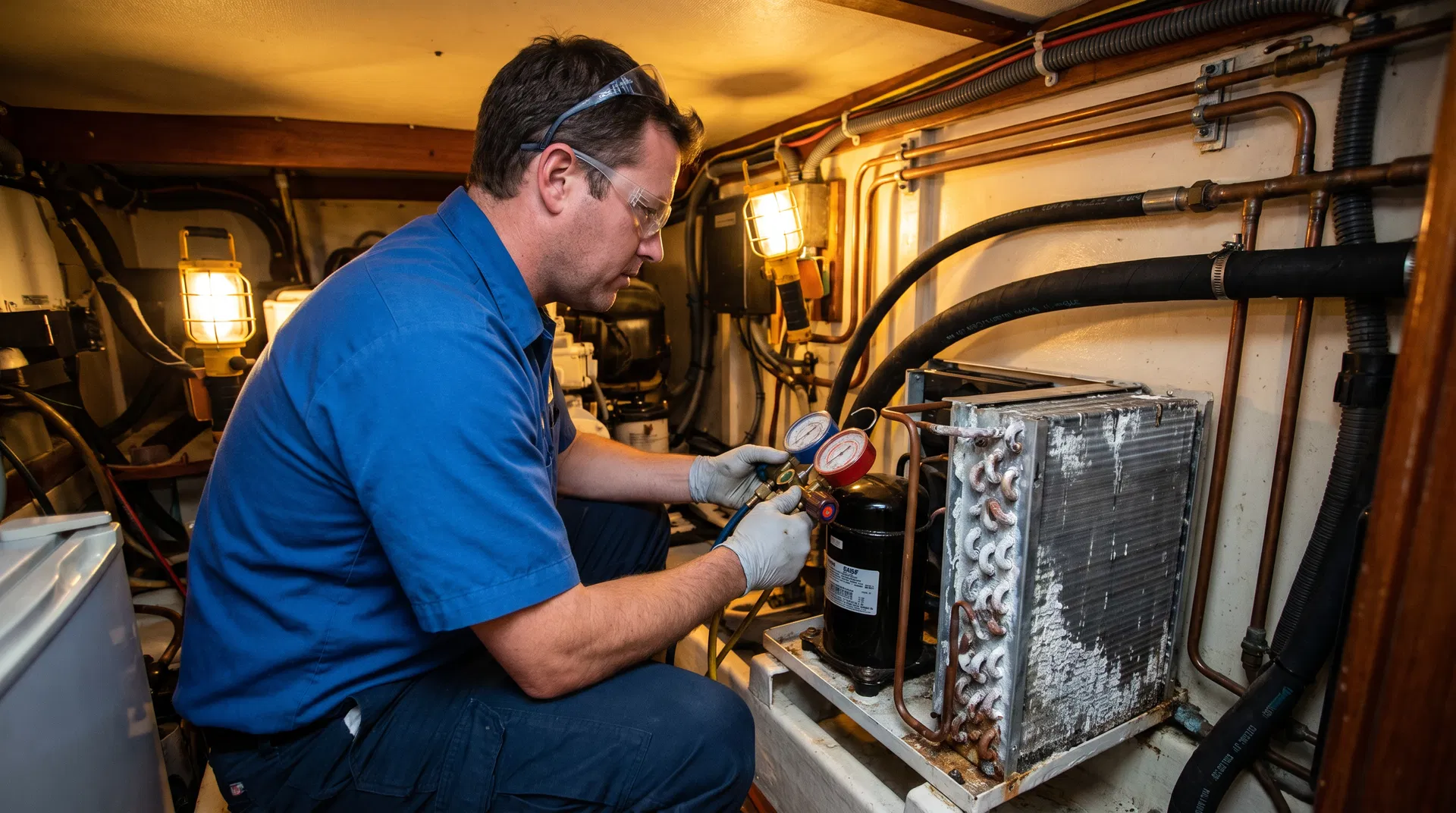
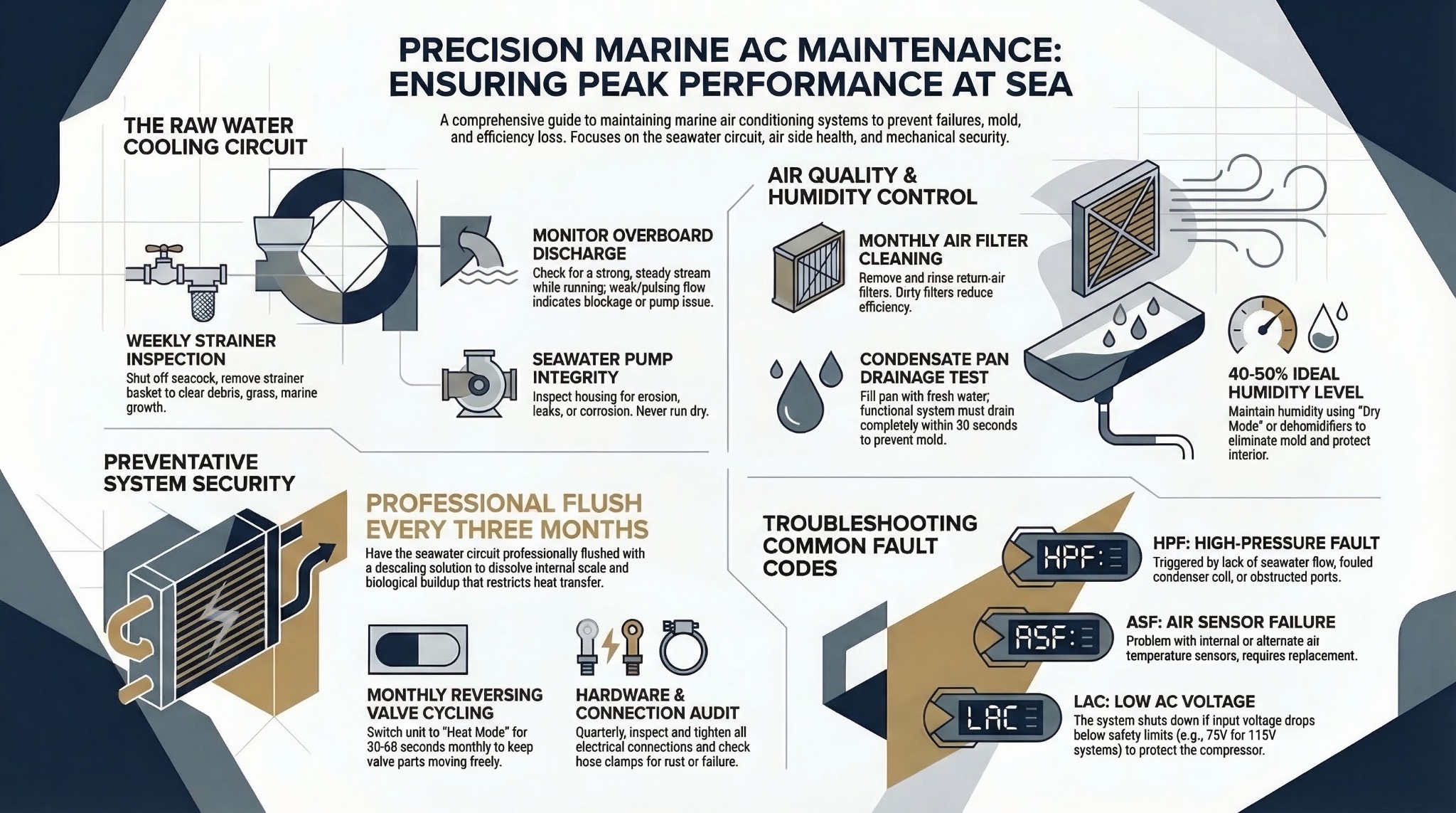
This is the single most important step. Use a marine-grade cleaning solution (we recommend Barnacle Buster or Rydlyme Marine) to flush the condenser, raw water lines, and sea strainer. For boats in Fort Myers Beach, Sanibel, and Pine Island waters — where scale buildup is among the worst in the country — we recommend a professional-grade flush that circulates the solution for 45-60 minutes under pressure.
Step 2: Clean or Replace the Raw Water Strainer
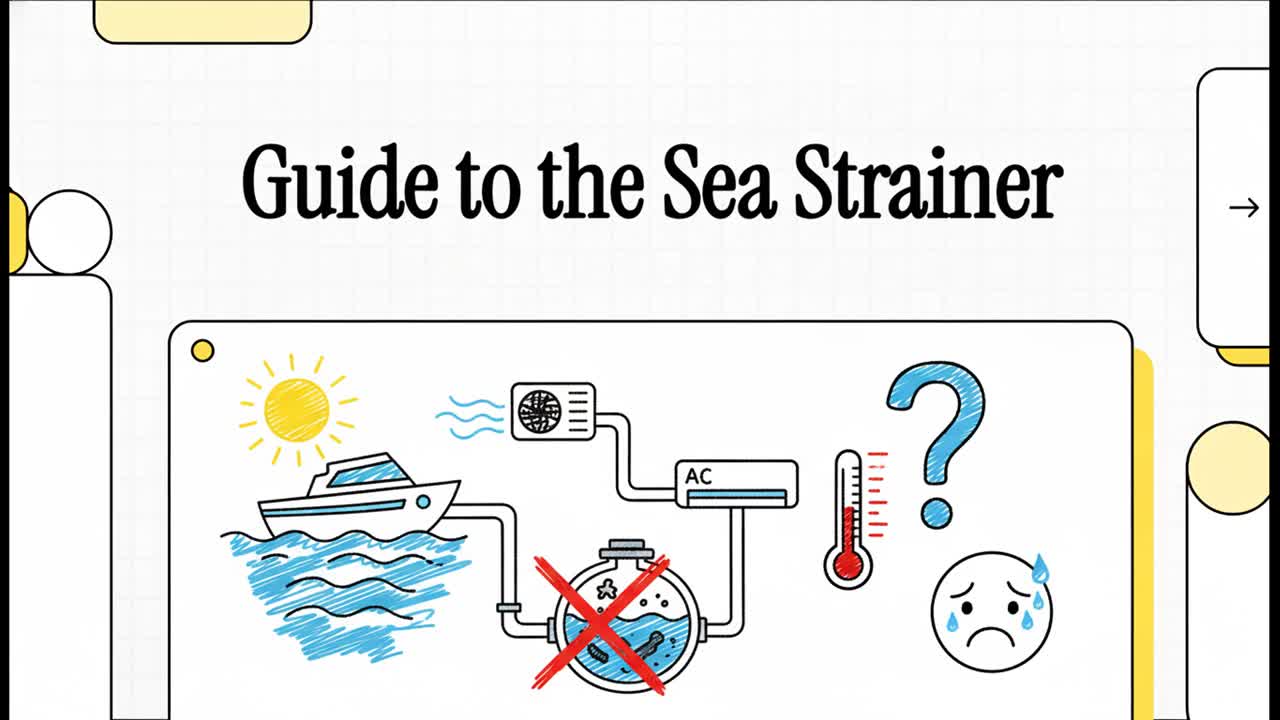
Remove the strainer basket and inspect it for barnacle growth, debris, and corrosion. If the basket is damaged or heavily fouled, replace it. Clean the strainer housing with fresh water and inspect the gasket seal.
Step 3: Inspect and Service the Raw Water Pump
Check the pump impeller for wear, cracks, or deformation. A worn impeller reduces water flow, which causes the system to overheat. Replace the impeller annually — it's a $30 part that prevents a $3,000 compressor replacement.
Step 4: Clean the Air Handler and Evaporator Coil
Remove the air handler cover and clean the evaporator coil with a coil cleaner spray. Check the condensate drain pan for standing water and clear the drain line. Spray the coil and pan with an antimicrobial treatment to prevent mold growth during periods of reduced use.
Step 5: Check Refrigerant Levels and Electrical Connections
Low refrigerant is a sign of a leak — and running the system low will damage the compressor. Have a certified technician (EPA 608 required) check the charge and inspect all electrical connections for corrosion, loose terminals, and proper voltage.
Step 6: Run the System Monthly During Winter
Even if you're not using the AC daily, run it for 30 minutes at least once a month. This keeps the compressor seals lubricated, circulates refrigerant oil, and prevents the raw water pump from seizing.
Common Mistakes Boat Owners Make
- Shutting off the AC and forgetting about it — idle systems deteriorate faster than running ones
- Skipping the flushing flush — scale doesn't dissolve on its own; it hardens
- Using automotive antifreeze — never use ethylene glycol in marine AC systems; it's toxic and damages seals
- Ignoring the condensate drain — a clogged drain leads to water damage in the cabin
When to Call a Professional
If your system hasn't been serviced in over 6 months, if you notice reduced cooling, unusual noises, or water leaks — it's time for a professional inspection. At Accumar Marine Services, we provide comprehensive marine AC winterization service throughout Southwest Florida, including Fort Myers, Cape Coral, Naples, Sanibel Island, Marco Island, and Punta Gorda.
Schedule Your Marine AC Winterization Today
Don't wait until spring to discover your AC system is damaged. Captain Roland and the Accumar Marine Services team have 25+ years of experience servicing Dometic, Webasto, Marine Air, Cruisair, and all major marine AC brands. We come to your dock — no need to move your boat.
Call us at 239-323-9600 or book online.