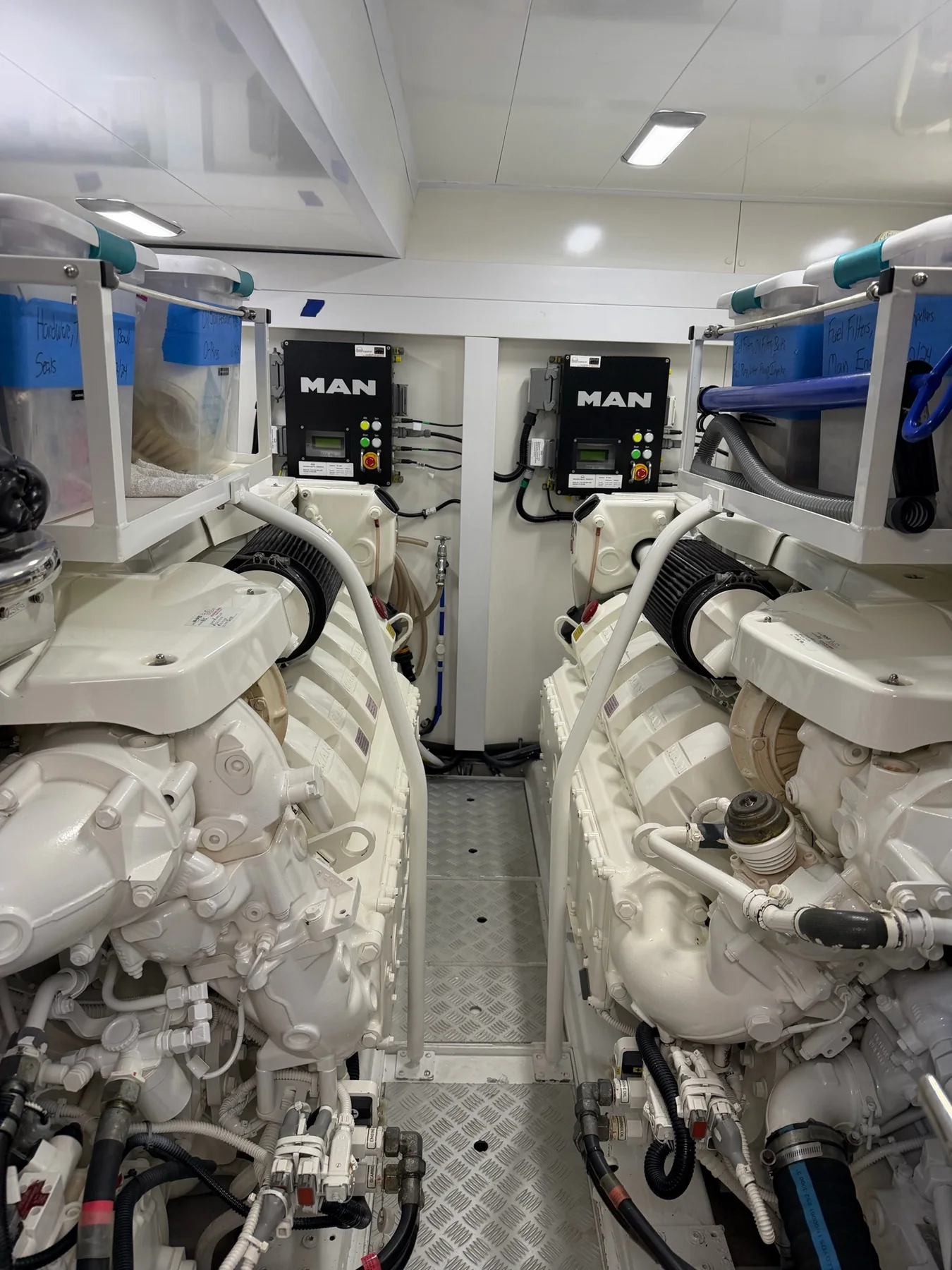
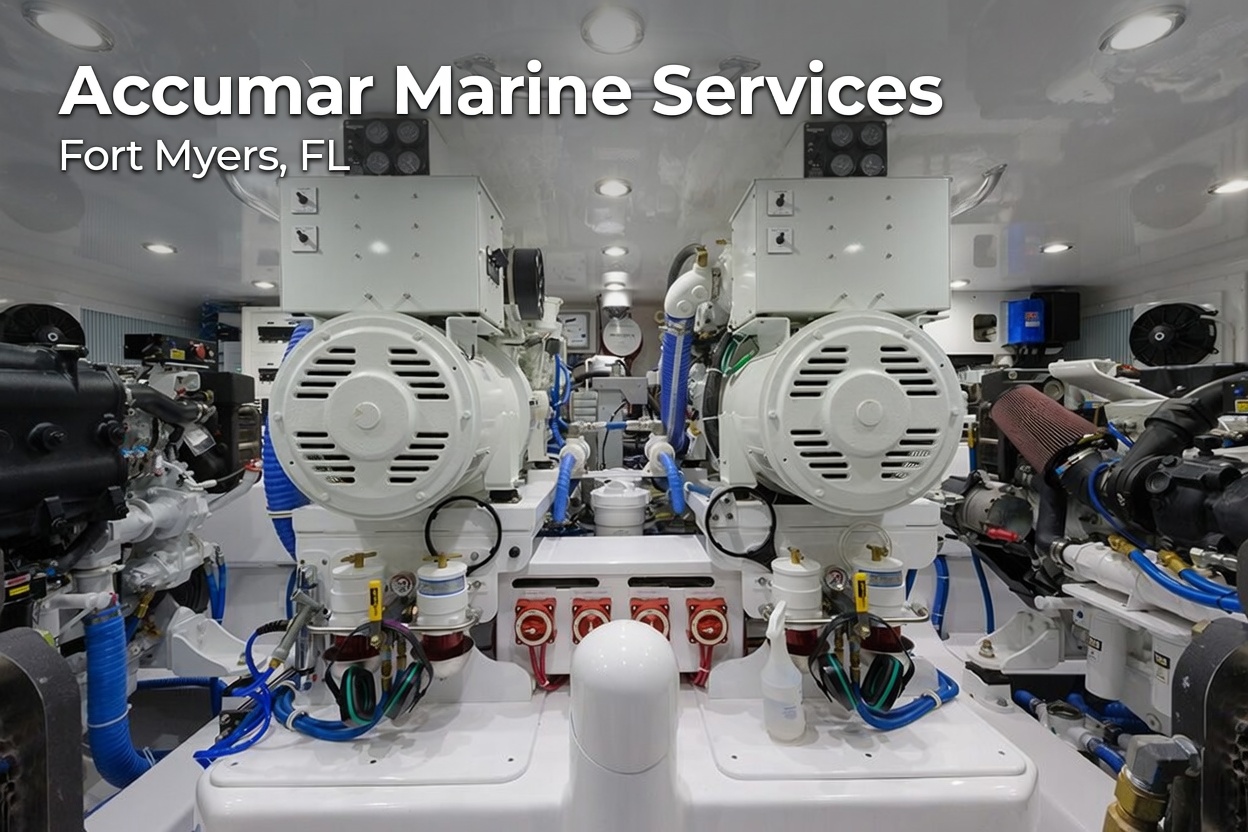
Twin MAN propulsion installation
An authentic ACCUMAR image documenting twin propulsion engines, surrounding controls, piping, and machinery-space access—the systems that must be considered together during diagnosis.
Southwest Florida's Yacht Systems Specialist · Fort Myers
Mobile diagnostics for marine diesel engines, gasoline outboards, generators, transmissions, and the supporting fuel, cooling, electrical, control, and drivetrain systems. We test the conditions that create the fault before parts or major work are quoted.
Equipment experience · not manufacturer authorization
Start with the symptom
The same symptom can come from more than one system. The first task is to reproduce or document the condition, then test the shortest evidence-based path.
Battery condition, voltage drop, starting circuit, stops and interlocks, fuel delivery, controls, alarms, and engine-specific checks.
Fuel supply, restrictions, air intake, charge-air path, exhaust, controls, propeller/load conditions, and available operating data.
Raw-water flow, strainers, pumps, impellers, heat exchangers, coolant circuit, thermostats, sensors, load, and installation condition.
Observed color and timing, fuel and air condition, crankcase and exhaust evidence, leaks, mounts, vibration, and mechanical checks selected from the findings.
Displayed code, event history where available, supply voltage, sensors, wiring, connectors, operating conditions, and physical verification before parts are selected.
Engine operation, mounts, couplings, transmission behavior, shaft alignment indicators, propeller/running gear, and load-dependent observations.
Original diagnostic record
A useful diagnosis creates a traceable record of the conditions, measurements, physical evidence, and remaining uncertainty. Not every engine requires every test; the sequence follows the installed equipment and first findings.
Failure conditions
RPM, load, temperature, alarm, smoke, sound, vibration, fluid use, recent work, and when the symptom appears.
Electrical evidence
Battery and supply voltage, voltage drop, starting/charging behavior, protection, grounds, wiring, connectors, and control power under the relevant condition.
Fuel, air, and exhaust
Tank-to-engine delivery, filters and water separation, restrictions, leaks, air path, turbo/charge-air condition where applicable, and exhaust observations.
Cooling circuit
Seawater flow, strainers, pumps, impellers, heat exchangers, coolant condition, thermostats, hoses, temperature readings, and visible discharge where applicable.
Electronic information
Displayed alarms and available event or live data are compared with physical measurements. Software access and functions depend on the exact engine and available tooling.
Mechanical and drivetrain
Leaks, mounts, belts, hoses, compression or other mechanical checks when justified, transmission interfaces, coupling condition, and running-gear factors.
Verification record
Work performed, parts or outside services required, access assumptions, operating checks, remaining concerns, and the next maintenance or repair decision.
Authentic ACCUMAR field evidence
These ACCUMAR project images document installed equipment and visible condition. They support the service scope but do not claim a guaranteed diagnosis, repair outcome, or manufacturer relationship.
An authentic ACCUMAR image documenting twin propulsion engines, surrounding controls, piping, and machinery-space access—the systems that must be considered together during diagnosis.
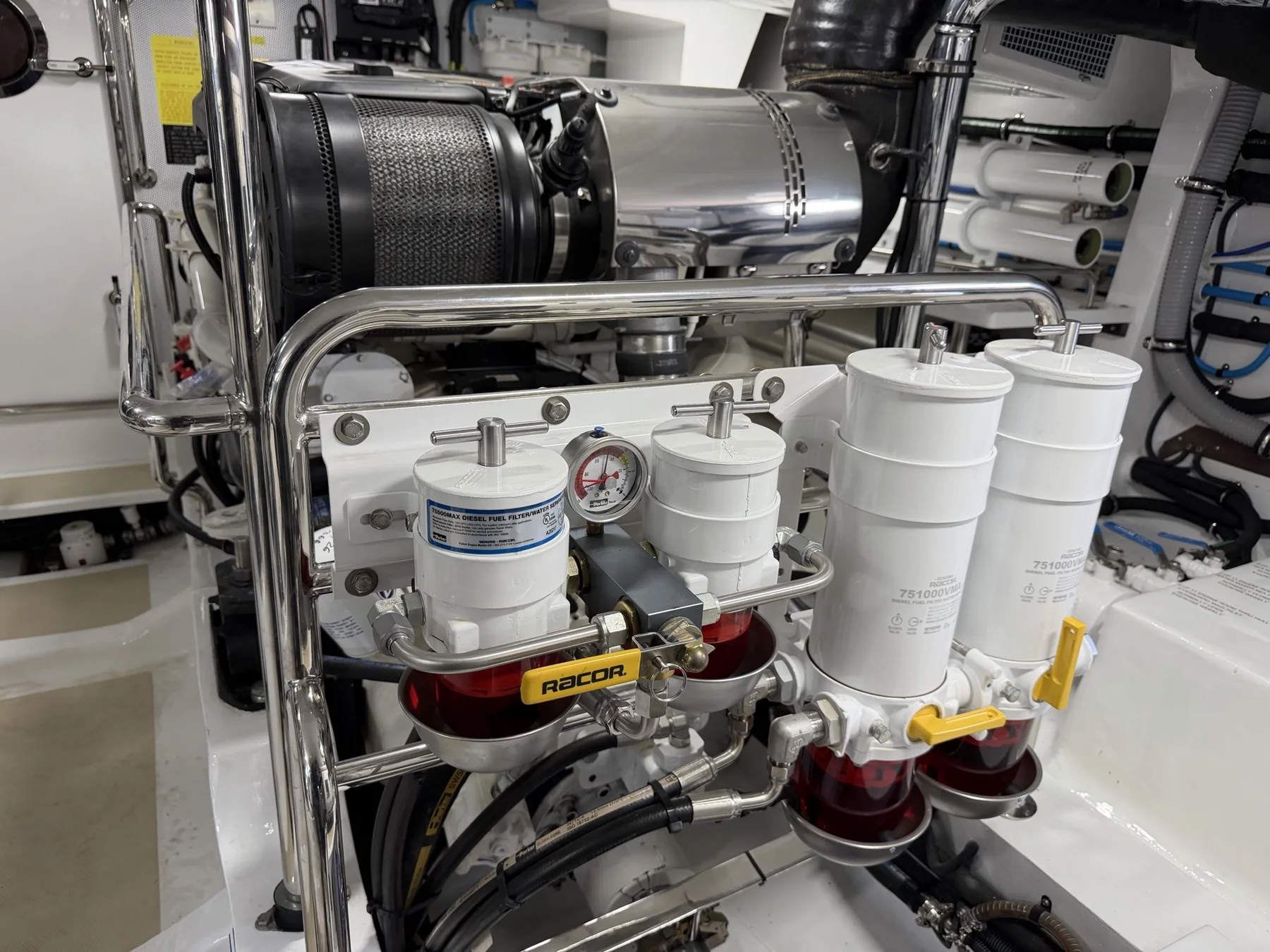
A multi-filter installation showing why a power-loss or no-start complaint cannot be reduced to an engine code without checking fuel delivery and the installed filtration path.
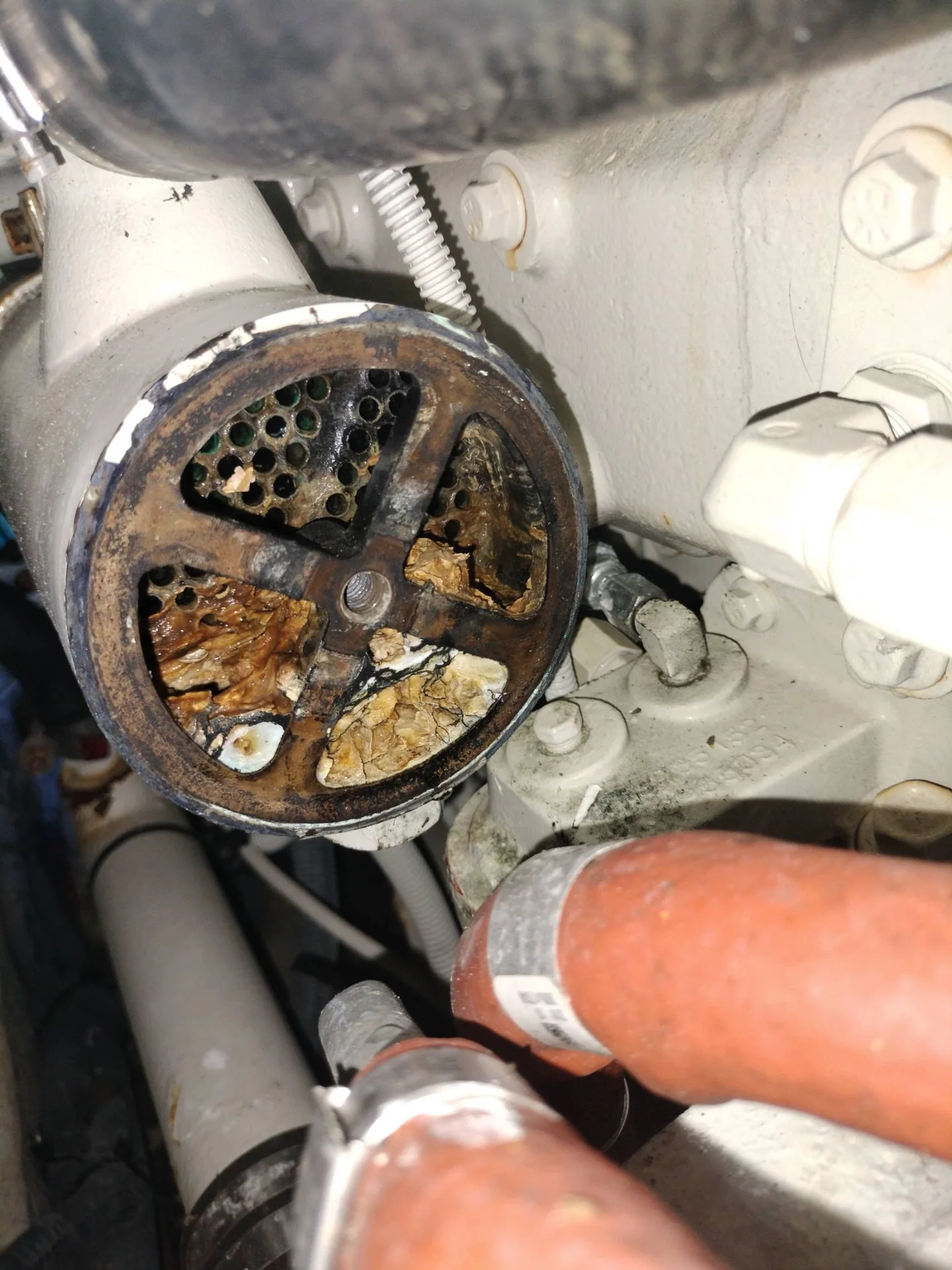
A documented heat exchanger opened for inspection, with visible fouling that can affect heat transfer and engine temperature under load.
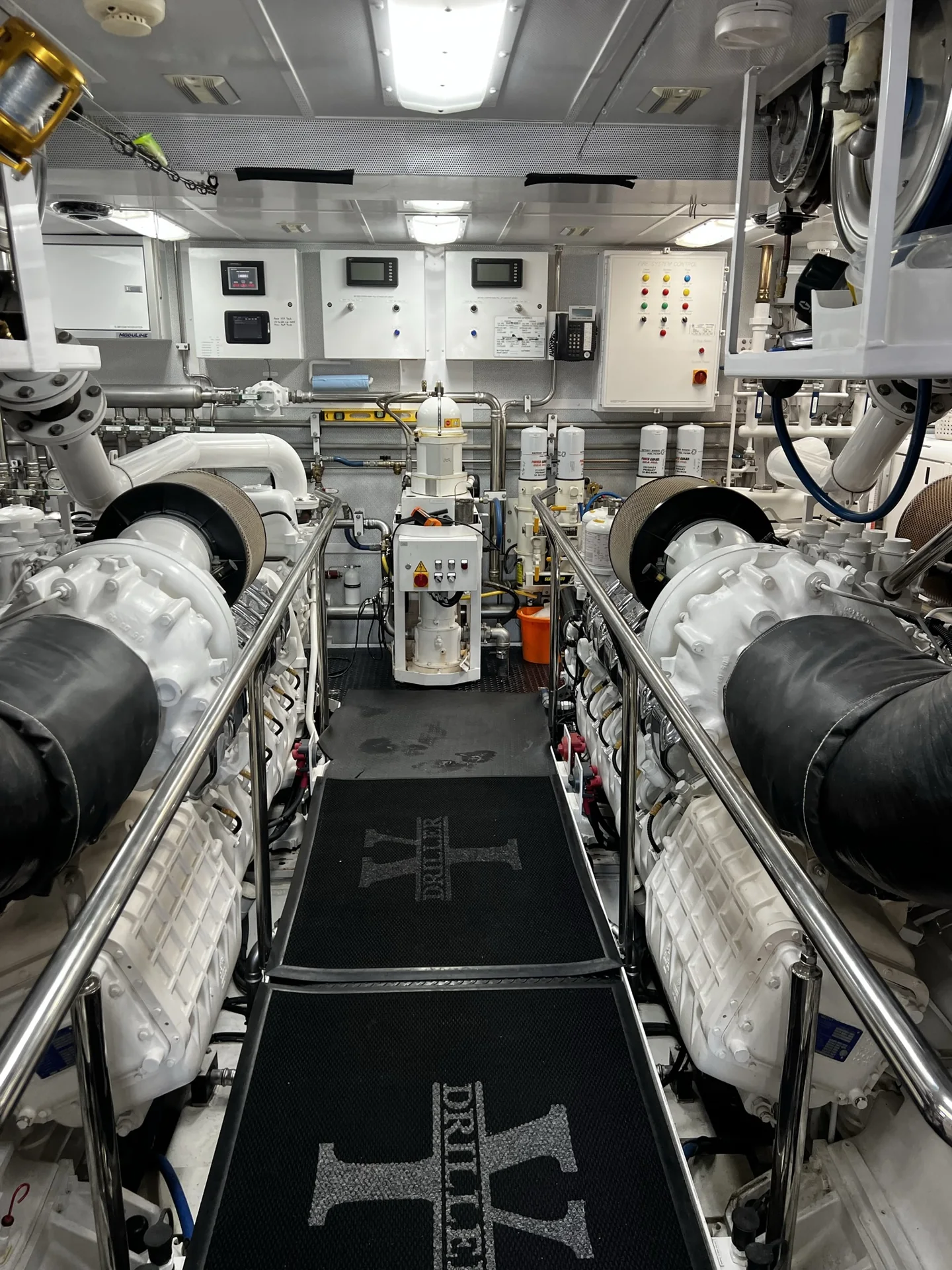
Twin engines, controls, plumbing, electrical supply, ventilation, and service access share one machinery space; the diagnostic plan must account for their interactions.
Owner-described Naples project
Naples, Florida
The owner reports full MTU 16V engine and gearbox service plus Condaria chiller service aboard a Pershing 80 in Naples. The photos show MTU engine-room equipment and refrigeration compressor assemblies; no image is presented as proof of a specific completed gearbox repair.
Engine scale: On this vessel, the owner reports 2,200 horsepower and 44 gallons of oil per MTU 16V engine. These are vessel-specific figures, not universal MTU 16V specifications.
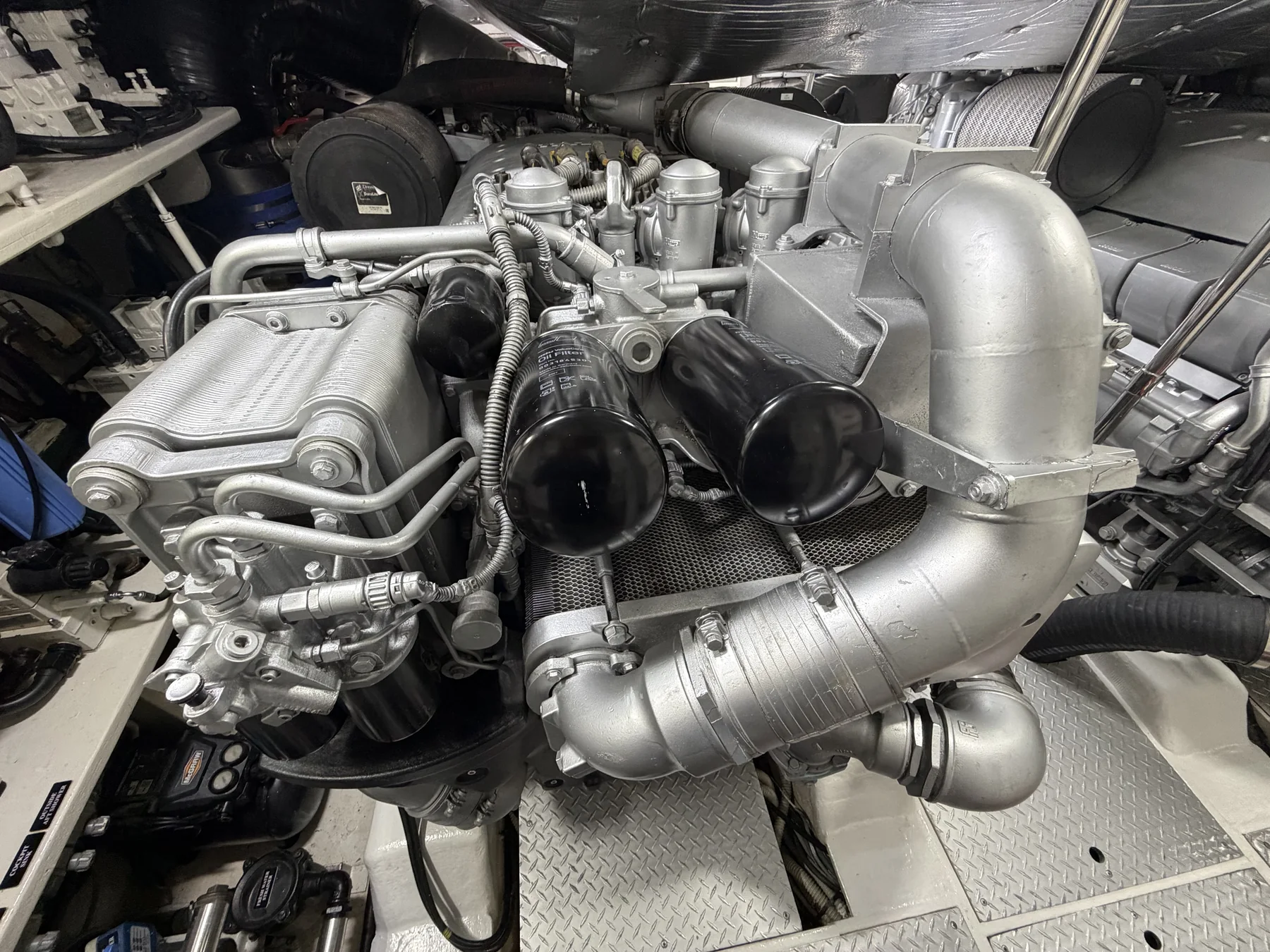
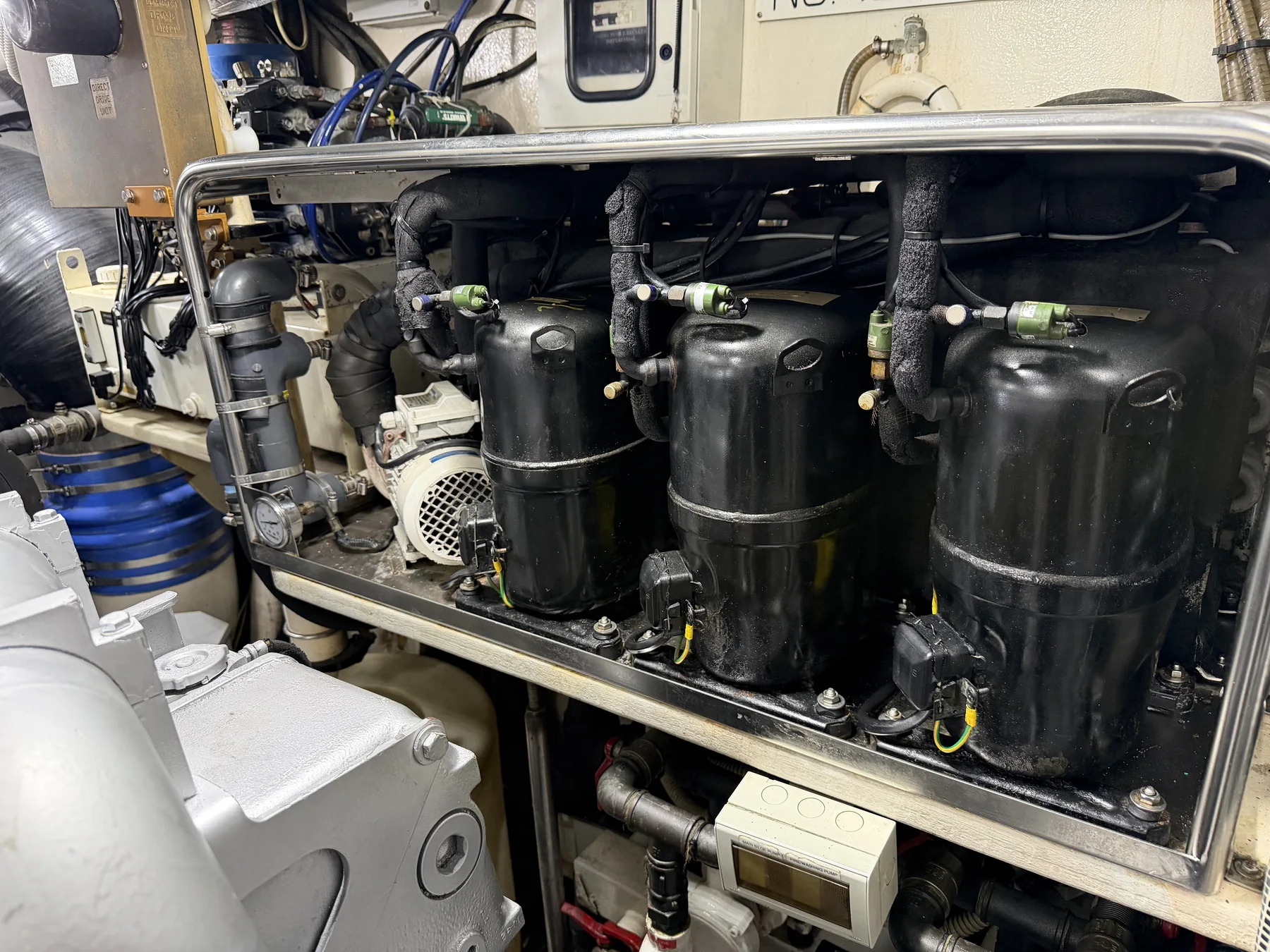
The goal is not to force every fault into the largest repair. The evidence, access, parts path, operating requirements, and uncertainty determine the next authorized step.
The fault is linked to a service item, connection, setting, restriction, alignment indicator, or other correctable condition and the surrounding equipment remains serviceable.
Testing isolates a supported component fault and the parts path, access, labor, compatibility, and post-repair test can be defined.
Internal condition, fuel-injection work, machining, electronic access, or another specialty cannot be confirmed without additional authorized scope or outside service.
Condition, repeated failures, operating goals, parts support, vessel access, downtime, and total project scope justify comparing larger options before authorization.
Brand names describe equipment experience only. They do not imply dealer, distributor, warranty, or factory authorization. Exact support depends on the installed model, serial information, condition, documentation, access, tooling, parts path, and requested work.
Service experience includes Cummins marine propulsion installations and their fuel, cooling, air, exhaust, electrical, control, and drivetrain interfaces. Exact diagnostic and repair scope is confirmed from the installed engine, serial information, access, documentation, and required tooling.
Potential service areas, confirmed after intake:
ACCUMAR evaluates Caterpillar marine engines and connected systems using the available fault history, physical measurements, service information, and vessel operating conditions. Brand experience does not imply Caterpillar authorization, warranty access, or universal software coverage.
Potential service areas, confirmed after intake:
Authentic ACCUMAR field images document work around twin MAN propulsion equipment and the surrounding engine-room systems. Support can include diagnosis, maintenance, cooling, fuel, exhaust, controls, access planning, and repair coordination subject to the installed model and findings.
Potential service areas, confirmed after intake:
ACCUMAR services supported Yanmar marine installations on sailboats and powerboats. Diagnosis begins with the engine identification, actual symptoms, maintenance history, fuel and cooling condition, electrical supply, controls, and access.
Potential service areas, confirmed after intake:
Outboard support is evaluated separately from inboard diesel work and may include starting, charging, fuel delivery, cooling, controls, alarms, trim/tilt, and scheduled service. Model, access, tooling, and parts availability determine the final scope.
Potential service areas, confirmed after intake:
ACCUMAR evaluates supported Volvo Penta marine engines and propulsion interfaces, including fuel, cooling, electrical, control, mounting, transmission, and load-related concerns. Pod or sterndrive work is scoped from the installed equipment and access requirements.
Potential service areas, confirmed after intake:
Before the visit
Provide the engine make, model, serial number, hours, displayed alarms, when the fault occurs, recent work, vessel location, access details, and clear photos or video. Parts, software, specialist, yard, and sea-trial requirements are confirmed after the installed equipment and findings are known.
Select a question to view the answer. Opening another question closes the previous one.
Open ACCUMAR’s verified Jobber Client Hub to submit available request details, review a quote, approve a required deposit, and keep job records in one secure place.
ACCUMAR job records and photographs. Job dates, reported faults, findings, repairs and verification are published only when supplied by Roland. Dates are not supplied for these records; this is not a chronological job list.
Actual ACCUMAR service photographs. Each caption retains its own recorded location; these are not all one assignment. No repair outcome is inferred. Select a photograph to enlarge it. Use the arrows or swipe to move through the gallery.
Close view of MTU-labeled engine covers aboard the Pershing 80. Naples, Florida.
Related ACCUMAR serviceMTU 16V diesel service showing filters, pipes and an engine-mounted heat exchanger. Naples, Florida.
Related ACCUMAR serviceMTU 16V diesel service with closely arranged cooling and filtration components. Naples, Florida.
Related ACCUMAR serviceCummins Onan generator service aboard the Pershing 80 in Naples, identified by ACCUMAR’s owner. The image shows the generator and surrounding engine-room equipment. Naples, Florida.
Related ACCUMAR serviceEngine room aboard a 78-foot Donzi, with twin marine engines, exhaust piping, hoses and adjacent service equipment.
Related ACCUMAR serviceNew fuel filter installed in the middle of the equipment space, with battery chargers to the right.
Related ACCUMAR serviceMost jobs run $200–$400, parts included, before tax. Every boat is different, and we confirm the price after we look at it. Labor starts at $160/hr with a 1-hour minimum.
Our AI phone receptionist answers calls 24/7. Service is by appointment, not 24/7, and there is no emergency service. Typical lead time: 3–4 weeks.
Request ServiceAwaiting Roland’s real customer questions and answers.